Breaking · Daily Terminal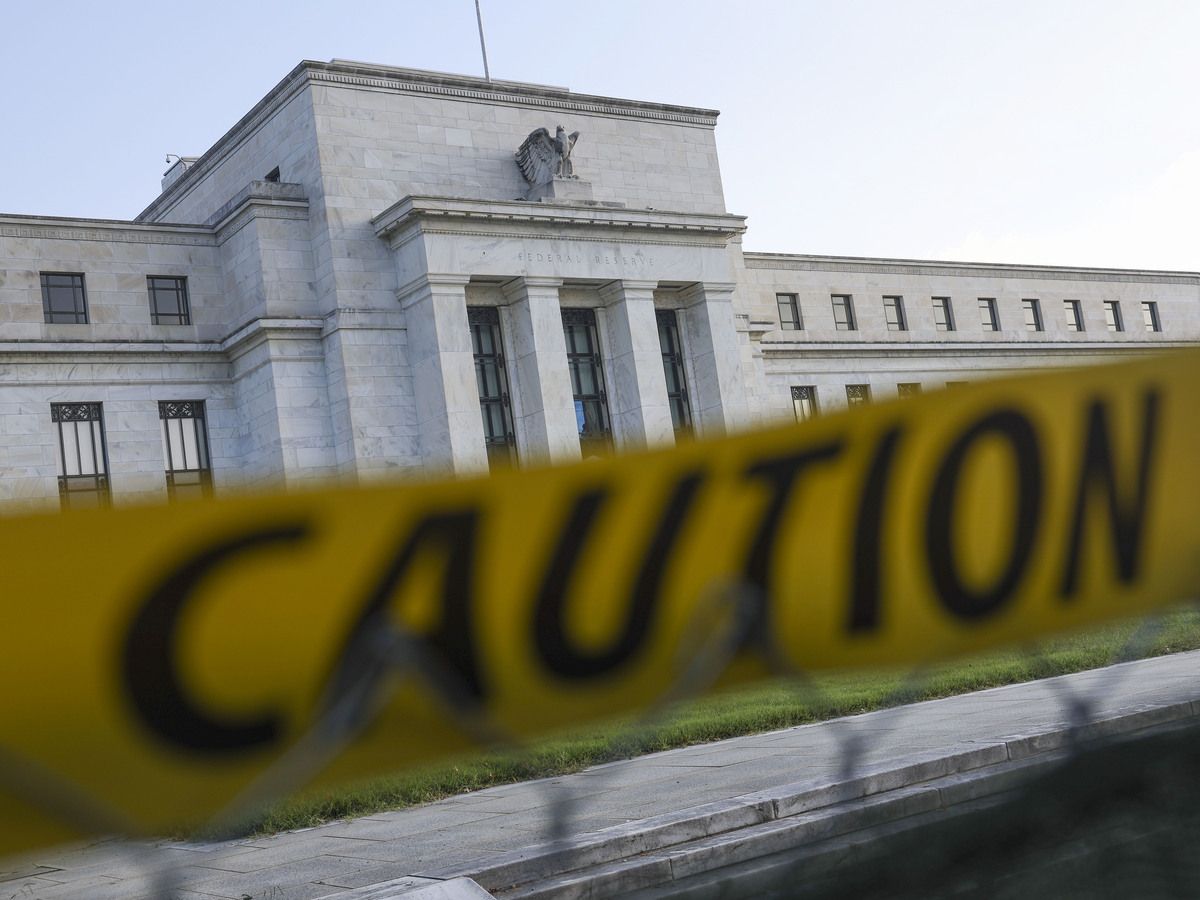
Skip to Content News Archives Economy Energy Oil & Gas Renewables Electric Vehicles Mining Commodities Agriculture Real Estate Mortgages Mortgage Rates Finance Banking Insurance Fintech Cryptocurrency Work Wealth Smart Money Wealth Management Investor Personal Finance Family Finance Retirement Taxes High Net Worth FP Comment Executive Women Puzzmo Newsletters Financial Times Business Essentials More Innovation Information Technology FP500 Podcasts Small Business Lives Told Tails Told Shopping Financial Post Store Obituaries Place a Notice Advertising Advertising With Us Advertising Solutions Postmedia Ad Manager Sponsorship Requests Classifieds Place a Classifieds ad Working Profile Settings My Subscriptions My Offers Newsletters Customer Service FAQ News Economy Energy Mining Real Estate Finance Work Wealth Investor FP Comment Executive Women Puzzmo Newsletters Financial Times Business Essentials Home Real Estate Mortgages The question on everyone's mind after this week's Fed rate hike Robert McLister: If an interest rate hiking cycle does arrive, don't expect our central bank to stop at one. It never has We all need to keep watching the headlines — especially with oil, AI’s growth impact and the market’s reaction to the budding U.S. fiscal crisis. Photo by Kevin Dietsch/Getty Images The world’s most important central bank kicked off its rate-hiking cycle yesterday, and now everyone wants to know one thing: how high will Canadian rates go?
Subscribe now to read the latest news in your city and across Canada. Exclusive articles from Barbara Shecter, Joe O'Connor, Gabriel Friedman, and others. Daily content from Financial Times, the world's leading global business publication.
Unlimited online access to read articles from Financial Post, National Post and 15 news sites across Canada with one account. National Post ePaper, an electronic replica of the print edition to view on any device, share and comment on. Daily puzzles, including the New York Times Crossword.
Subscribe now to read the latest news in your city and across Canada. Exclusive articles from Barbara Shecter, Joe O'Connor, Gabriel Friedman and others. Daily content from Financial Times, the world's leading global business publication.
Unlimited online access to read articles from Financial Post, National Post and 15 news sites across Canada with one account. National Post ePaper, an electronic replica of the print edition to view on any device, share and comment on. Daily puzzles, including the New York Times Crossword.
Create an account or sign in to continue with your reading experience. Access articles from across Canada with one account. Share your thoughts and join the conversation in the comments.
Enjoy additional articles per month. Get email updates from your favourite authors. Create an account or sign in to continue with your reading experience.
Access articles from across Canada with one account Share your thoughts and join the conversation in the comments Enjoy additional articles per month Get email updates from your favourite authors Sign In or Create an Account or That includes economists, some of whom were calling for Bank of Canada rate cuts earlier this year and have since done a full 180, now predicting hikes will come sooner than expected. (Gotta love forecasting: where conviction has a shelf life of about six months.) But there’s a wrinkle. The Bank of Canada’s preferred inflation gauge — average core inflation — is still sitting below target at 1.95 per cent. So some skeptics don’t see enough pass-through from oil, tariffs and the rest to justify a serious hiking cycle.
SUBSCRIBER EXCLUSIVE: FP West: Energy Insider brings you behind the oilpatch’s closed doors with exclusive insights from insiders every Wednesday morning. By signing up you consent to receive the above newsletter from Postmedia Network Inc. A welcome email is on its way.
If you don't see it, please check your junk folder. The next issue of FP West: Energy Insider will soon be in your inbox. We encountered an issue signing you up.
Please try again Predicting how much rates will rise is a great way to become a screenshot on social media, so I’ll pass. But here are three things that might help you size up your rate risk. The fact that our central bank’s favourite inflation measure is sitting below two per cent doesn’t mean a hike is off the table.
I went back through the record and found 38 instances where Canada’s prime rate rose even with core inflation at or below 2.0 per cent. They came in clusters — 1992–2000, 2002–2006, 2010, and 2017–2018 — all periods when core inflation ran persistently below target, meaning the central bank was tightening largely for other reasons. If a hiking cycle does arrive, don’t expect our central bank to stop at one.
It never has. Governor Tiff Macklem all but confirmed as much at his Sept. 2 press conference, saying to expect “more than one increase” if tightening begins. History, since the dawn of inflation-targeting, shows hiking cycles last about 2.5 years on average, with the Bank of Canada hiking just over 2.75 percentage points over that stretch.
That said, plenty of people think this cycle won’t need to be an “average” one, given: The GDP hit from our deteriorated U.S. trade relationship The limited scope of inflation (mostly energy-related) An economy that still has slack (“excess supply” as policy makers call it ) Trump may hit us with more tariffs or trade restrictions before he’s out of office AI’s potential impact on employment . Deep hiking cycles are usually the central bank’s answer to an overheating economy, and overheating is not exactly our problem right now. Here’s some other context to anchor expectations: The shallowest hiking cycle in modern records was just 75 basis points, back in 2010.
The central bank could hike 100 basis points and still be at “neutral,” the point at which rates are still not restricting the economy (theoretically, anyway). The Bank of Canada’s estimate of neutral ranges from 2.25 per cent — where we are today — to 3.25 per cent. Put all this together, and the bond market’s implied 125 to 150 basis points of coming hikes seems reasonable, especially if inflationary tariffs and extreme oil prices are out of the picture by next year.
If the Middle East conflict escalates, or tariff costs seep through the economy more broadly than expected, this cycle could end up being worse than average. In other words, it’s worth having a plan. If that’s keeping you up at night, here’s your to-do list: Run your mortgage through a payment calculator to estimate how much your payments could jump — either at renewal or right away if you’re on an adjustable rate.
Estimate how much leftover income you’ll have if rates rocket 200-plus basis points higher. If your budget’s already tight, find something to cut back on to start building a savings buffer now, before you need one. Consider refinancing while you still can — to pull out equity while home prices are stable, stretch your amortization for more payment flexibility or line up a HELOC as backup liquidity In the meantime, we all need to keep watching the headlines — especially with oil, AI’s growth impact and the market’s reaction to the budding U.S. fiscal crisis.
Six weeks from now, the Bank of Canada meets again and we’ll get a clearer read on its intentions. Given what’s at stake, Governor Macklem might give us a few hints on his thinking before then. Robert McLister is a mortgage strategist, interest rate analyst and editor of MortgageLogic.news .
You can follow him on X at @RobMcLister . For the best national insured and uninsured mortgage rates, updated daily, please visit our mortgage rate page here . Join the Conversation This website uses cookies to personalize your content (including ads), and allows us to analyze our traffic.
Read more about cookies here . By continuing to use our site, you agree to our Terms of Use and Privacy Policy .
Source: Financial Post